Próximo libro

Este libro surgió de mis muchos años de experiencia práctica y de una creciente conciencia de cuán fácilmente se puede perder la originalidad a través de una intervención bien intencionada pero innecesaria. Su énfasis está en la toma de decisiones reflexiva, informada por la historia, los materiales y el contexto, guiando al restaurador a abordar cada pieza con cuidado, respeto y comprensión.

Se ha escrito mucho sobre la reparación práctica de muebles antiguos, en particular la importancia de la integridad estructural y las uniones sólidas, y este libro también incluye un capítulo dedicado a estas habilidades esenciales. Pero su enfoque principal está en la comprensión más amplia que se requiere del restaurador, explorando consideraciones y elementos menos obvios de la práctica comercial que rara vez se discuten en forma impresa.
Partiendo de esta perspectiva más amplia, primero preguntamos qué es realmente una antigüedad, antes de considerar cómo reconocer el artículo genuino entre ejemplos menores o copias. Examinamos dónde y cómo adquirir piezas auténticas aptas para restauración, y cómo estimar la cantidad y viabilidad del trabajo necesario. Sólo mediante una evaluación cuidadosa se puede determinar el tipo de intervención que puede ser apropiada y si se ajusta al conjunto de habilidades actuales o a aquellas nuevas que se pueden desarrollar a través de la guía de este libro.

Una vez que se ha evaluado estructuralmente una pieza y se ha confirmado su autenticidad, la atención se centra naturalmente en la superficie. Los acabados suelen contener pistas sobre la historia de la pieza y, con frecuencia, son el elemento más vulnerable. Este libro examina cómo identificar y evaluar los acabados existentes, decidir si se pueden conservar y, en caso contrario, cuál es la mejor manera de proceder manteniendo el respeto por el carácter y la historia del mueble.

Las técnicas se presentan dentro de un marco con mentalidad conservacionista, de modo que el lector no sólo aprende cómo se lleva a cabo una tarea, sino también por qué se prefiere un enfoque particular. El libro incluye un capítulo dedicado a la preparación de productos de restauración internos, lo que permite al restaurador mantener un control total sobre los materiales y los resultados, de modo que cada paso pueda realizarse con certeza, evitando la imprevisibilidad inherente a muchos productos preparados comercialmente.

Se asume un nivel básico de experiencia en carpintería o ebanistería. Aunque esto no pretende excluir a aquellos que se encuentran en una etapa anterior de su carrera, sino simplemente reconocer que las antigüedades rara vez son el mejor entorno para practicar y desarrollar habilidades fundamentales. Desarrollar estas habilidades en otros lugares, mientras se realizan las intervenciones más pequeñas descritas, permitirá en última instancia al lector abordar la conservación de muebles históricos con mayor habilidad, confianza y profesionalismo.

Restauración y reparación de muebles antiguos y finos está escrito para quienes desean ir más allá de las reparaciones rutinarias y los tratamientos cosméticos y hacia una práctica más reflexiva y profesional. Ya sea para uno mismo o como carrera.

La fecha de publicación debería ser a finales de marzo o principios de abril. Pero puedes reservar ahora y ahorrar desde www.barry-horton.com

Herramientas de afilado de bordes

El afilador de cuchillos de francisco de goya

Mientras afilaba algunos cinceles el otro día, me puse a pensar en afilar herramientas de filo en general. Un borde fino y afilado es esencial si queremos realizar un trabajo fino con facilidad. Un borde fino debe dejar una superficie pulida que necesite poco o ningún trabajo adicional antes de recibir un acabado. No soy un gran partidario del uso de abrasivos antes del uso de un acabado. El polvo producido tiende a obstruir los poros de la madera y por muy fino que sea el abrasivo, los microrayones rompen la luz refractada sobre la superficie. El resultado es una apariencia más apagada. Por el contrario, el borde fino de una hoja plana o un cincel bien afilado dejará un brillo que cobra vida cuando la luz incide en las desviaciones imperceptibles que deja el buen trabajo manual. Esto le da carácter y alma a la pieza terminada que atrae atención e interés. A menudo atrae la mano de un admirador para que se extienda y acaricie la superficie. Si este es el tipo de trabajo que hace o aspira a hacer, sin duda influirá en su elección del método de afilado. Dios como dicen está en los detalles.

El afilado de herramientas de corte es probablemente uno de los temas más discutidos en el ámbito de la carpintería; casi todo el mundo tiene una opinión diferente sobre el tema. Piedra de aceite, piedra de agua o diamante. Luego existen otros métodos, como papel abrasivo, pastas, etc. y algunas configuraciones completamente mecánicas. Sin duda todos tienen sus puntos fuertes y algunos más debilidades que otros. Luego están aquellas personas a las que les gustan los gadgets, mientras que otras adoptan un enfoque más minimalista. Considero que no vale la pena ser demasiado dogmático, mucho depende del tipo de trabajo de cada uno y del acabado deseado; ya que todos los métodos anteriores producirán un filo utilizable.

Carberundo y piedras petrolíferas de Arkansas
Mi estación de afilado actual, el asentador de cuero justo a la izquierda de la lata de aceite.

Personalmente, he recorrido un largo camino circular para encontrar qué sistema realmente se adapta mejor a mí y a mi trabajo. En muchos casos, no sólo con el afilado. Descubrí que lo que parecía una buena idea o herramienta no siempre se traduce en práctica. Para ilustrar mejor lo que quiero decir, tomemos los cinceles como ejemplo. Tengo muchos, un fantástico juego de cinceles más firmes Marples con mangos de boj. Estos solo salen cuando hay trabajo pesado que hacer, para el uso diario me resulta incómodo usarlos. La virola de latón me roza los dedos y, al cabo de varias horas, me duele bastante. Por esta razón prefiero los cinceles de encaje. Los cinceles japoneses no tienen estos casquillos de bordes afilados, mantienen bien un borde fino, pero yo tampoco los uso raramente; Si me preguntaras por qué, no podría decírtelo. Simplemente descubro que instintivamente busco en mi armario de cinceles mis viejos cinceles de acero fundido como Witherby, Keenkutter y Stanley, una vez más, no puedo entender exactamente por qué. Tengo los de Lie Nielsen que también son geniales, pero no se acostumbran tanto como los Witherby. Admito que soy un poco romántico, pero no creo que esta sea mi principal influencia, porque últimamente he estado reemplazando muchas de las palas de mi avión con Veritas PM.V11 unos. Es más bien un caso de que algunas cosas parecen tener una mejor capacidad de traducir mis ideas en realidad. Eso es lo mejor que puedo ofrecer a modo de explicación. Algunos que lean esto reconocerán inmediatamente lo que estoy tratando de explicar. Mientras que otros pueden simplemente tacharme como un viejo excéntrico. No me siento ofendido y realmente no importa, el punto que estoy tratando de transmitir es que no existe una solución única para todos y esto puede deberse a razones muy personales y eso está bien.

Aprendí a afilar sobre un viejo juego de piedras de carborundo de 3 granos progresivos con un trozo de pizarra pulida para afilar. Me dijeron que siempre usara un patrón en forma de 8, excepto con hojas muy estrechas, que era mejor dibujarlas hacia uno mismo. Esto evitó que la estrecha hoja se clavara y estropeara la piedra. Se prefirió el movimiento en forma de 8 porque cortaba más rápido, al presentar siempre una trayectoria diferente de la arena a lo largo del borde que se estaba afilando. También fomentaba un desgaste uniforme de la piedra, especialmente si se variaba un poco la ejecución del 8 para cubrir toda la piedra. Debo admitir que nunca he visto ninguna evidencia científica que respalde ninguna de estas afirmaciones. Sin embargo, fueron lecciones bien aprendidas y métodos que seguí utilizando durante los años siguientes. Para mí, el razonamiento resuena en un nivel intuitivo, mientras que la práctica no ha demostrado lo contrario. En aquellos primeros días existían guías de afilado, pero la sensación era que eran para usuarios ocasionales que no dominaban el arte de afilar herramientas de filo y pulirlas. Aunque esto olía a elitismo, no se puede negar que una vez que se aprende la habilidad de sostener el hierro bloqueando las manos y luego limitando todo movimiento a los codos, es una habilidad para toda la vida. Esas guías baratas tipo Eclipse pueden ser útiles para esas palas muy estrechas mencionadas anteriormente. Pero definitivamente no hay necesidad de costosas configuraciones con todo tipo de accesorios. Es mucho mejor aprender la habilidad y luego gastar el dinero ahorrado en piedras de buena calidad.

Muela abrasiva manual

Antes de hablar de las piedras, sólo quiero decir unas palabras sobre el pulido. Creo que hace unos treinta años leí un libro de James Krenov. Creo que pudo haber sido El fino arte de la ebanistería. En él, James explica cómo utiliza una amoladora manual con una piedra de amolar de aproximadamente 5 1/2 ″ (140 mm) y un soporte de herramienta ajustable hecho a medida. En aquel entonces, las amoladoras lentas no eran comunes y el pavonado de las herramientas siempre fue un peligro constante que debía evitarse. La pequeña piedra también deja un marcado hueco. cuyos hombros proporcionan su propia guía de bruñido. Este es ahora mi método preferido y lo recomiendo mucho; si es así, puedes encontrar una buena amoladora manual. No te preocupes por el estado de las ruedas que trae, se cambian fácilmente.

piedras de agua variadas
Surtido de piedras de agua japonesas, piedras de cerámica y platos de diamante.

Como dije, comencé con piedras de aceite, pero me atrajeron las promesas de las piedras de agua, la cerámica y las placas de diamante. No recuerdo exactamente en qué orden, pero me quedé con las piedras de agua por más tiempo, son buenas. El problema con ellos es su necesidad de aplanamiento constante y el agua siempre presente. Siempre me preocupaba si había secado y engrasado correctamente la hoja. Luego el estanque de agua necesitaba ser lavado periódicamente, necesitaba más piedras para aplanar las piedras de afilar. Algunas piedras podían vivir en el estanque, mientras que otras debían remojarse durante 5 minutos y una o dos solo rociarse. La cerámica y las piedras de diamante eliminaron algunos de estos problemas, pero no dieron resultados tan buenos o fueron mucho más lentos. Como puede imaginar, en ese momento había invertido bastante en herramientas de afilado y era reacio a invertir más. Estaba obteniendo los resultados que quería, pero no estaba satisfecho con la configuración ni con el tiempo necesario.

Entonces dos acontecimientos convergieron al mismo tiempo. Tenía algo de dinero extra después de una comisión inusualmente lucrativa (suceden de vez en cuando) y encontré una oferta fantástica para piedras duras de Arkansas. Se trataba de piedras de banco de tamaño natural, que hoy en día son tan raras como los dientes de gallina. Compré una piedra dura translúcida y una piedra negra de calidad quirúrgica aún más dura. A esto se sumó un par de piedras Norton de nueva tecnología. Uno de grano grueso y otro de grano medio. Solo uso la piedra gruesa, seguida de la mediana, cuando hay una pequeña muesca que no justifica la muela. En uso normal entre pulidos sólo es necesario utilizar un pulidor ligero en las dos piedras Arkansas. yo uso aceite de balistol mezclado con un poco de aguarrás. Basado en aceite mineral medicinal blanco y extractos vegetales, fue desarrollado por el ejército alemán durante la Primera Guerra Mundial. Huele muy agradable y tiene una cualidad antiséptica, lo cual se agradece si tienes algunos de esos cortes en las manos.

Ahora bien, no estoy sugiriendo que te apresures a seguir todos mis métodos, o que alguno de ellos llegue a eso. Pero si simplemente está armando una estación de afilado de herramientas de borde o no está satisfecho con la que tiene. Entonces espero que lo anterior haya dado algo de reflexión, o al menos haya sido interesante de leer.

Banco de ebanistas tradicionales

Un banco de ebanista tradicional
Un banco demasiado tarde

Para cualquiera que se tome en serio la fabricación de muebles, un banco de ebanista decente se convierte en la herramienta más importante que tiene en su taller. Porque sin un banco de trabajo no se podrá aprovechar todo el potencial de cualquier otra herramienta. La lucha resultante puede convertir el taller en una zona de guerra, en lugar de un tranquilo santuario creativo donde suceden cosas buenas. Si bien el mejor banco para fabricar muebles siempre será un banco de trabajo exclusivo para ebanistas, el tiempo, el espacio y el presupuesto pueden dictar otras opciones. Su oficio, pasatiempo y tamaño del proyecto también pueden sugerir una elección de banco de trabajo diferente. Sin embargo, todos compartirán características clave. Los bancos de trabajo pueden ser cosas simples u obras de arte realmente sofisticadas, realmente no importa, siempre y cuando sean resistentes, sólidos y pesados ​​y posean un medio para sujetar y asegurar firmemente la pieza de trabajo.

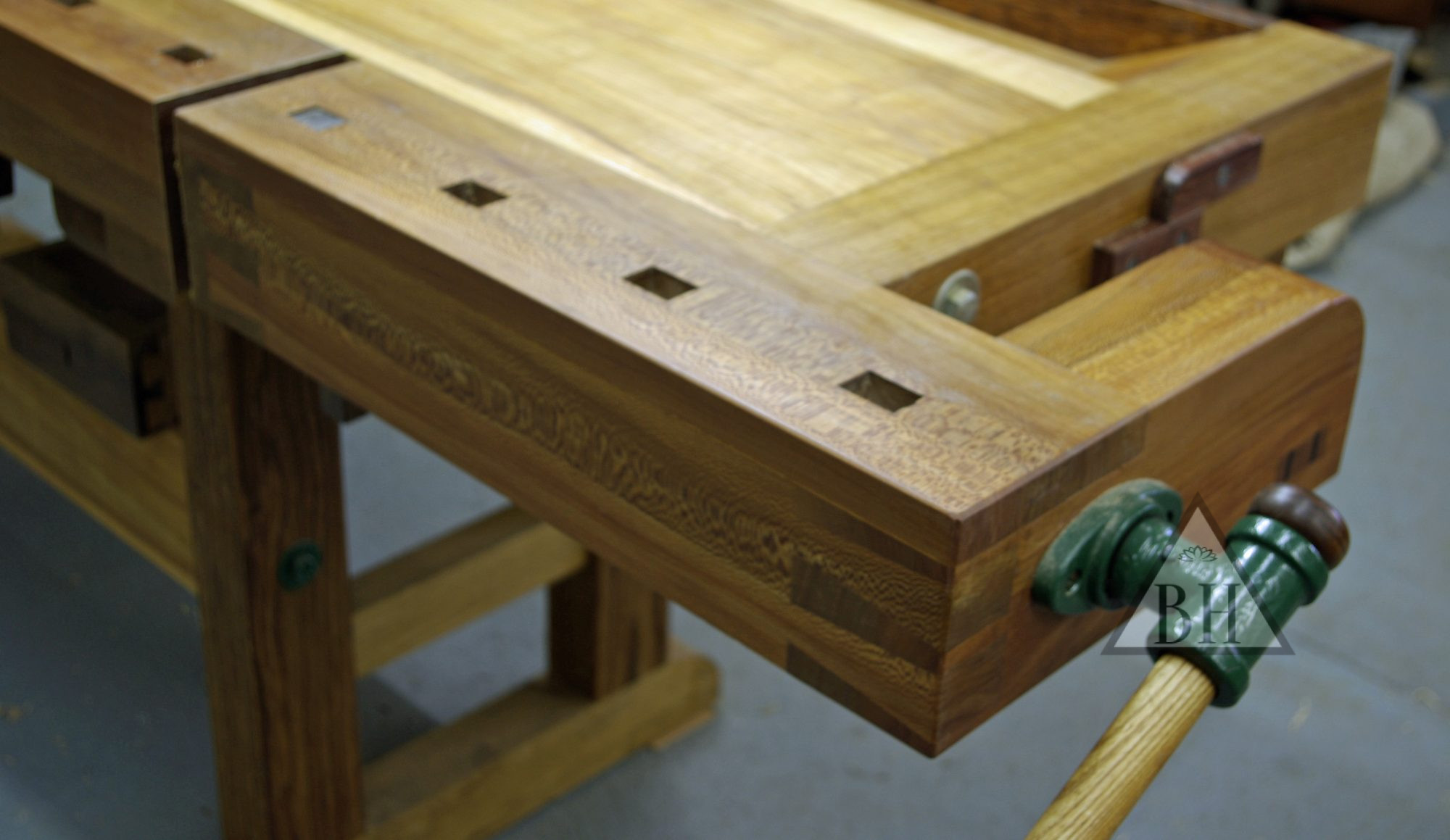
Dicho esto, pensé en hablar de mi último banco de ebanista, un estilo que prefiero desde hace mucho tiempo y que se ha ido perfeccionando a lo largo de los siglos en el norte de Europa. A menudo conocido hoy en día como el banco Frank Klaus, porque Frank ha hecho mucho para popularizar el estilo. El banco de Frank apareció en El libro del banco de trabajo por Scott Landis. Lo cual, por cierto, es un gran recurso si desea construir usted mismo un banco de ebanista como este. Cuenta con explicación detallada de detalles constructivos y planos dimensionados. Originalmente, este estilo de banco evolucionó lentamente a medida que cada generación de artesanos agregó algo, cambió un detalle o tal vez eliminó algo innecesario, hasta que surgió lo que es prácticamente el diseño perfecto. Tiene sus críticos, pero generalmente encuentro que son carpinteros que no trabajan de manera tradicional con herramientas manuales. Esto no es una crítica hacia ellos, la carpintería es, después de todo, un oficio rico y variado, con espacio para todos los enfoques.

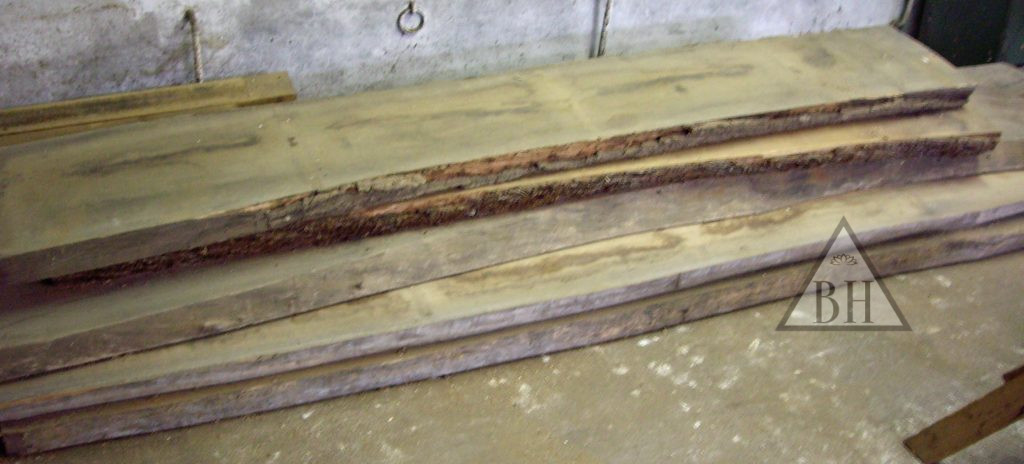
Enough preamble, so I’ll get on with my story. Or should I first say, backstory. It all began with what is now my second bench in this style. The first bench was made by someone early in the twentieth century, it came my way after I saw an ad. From the photo I could see it was in a disheveled state but unlike so many I had seen, it was still sound. So off we set on a four hour journey to a small town near the Swiss/French boarder. Shortly after arrival and a bit of friendly bartering this vintage cabinet makers bench was mine for a few hundred euros. Even in its neglected condition it was still a bargain. A Nuevo bench like this today, if you could ever find one, would cost in the region of € 5000. I wouldn’t like to put a value on my Nuevo bench, but I will tell you it took me 7 weeks to make from an imposing pile of Timber.

The old bench has served me well over many years, but there were just a few tiny niggles, not even that really. Just thoughts now and then , like that if I was making this bench now, I would do this or that differently. So about seventeen years ago I went to talk with Fabrice in my local wood yard. Told him what I wanted to do, that I wanted to depart from the traditional bench timber, Beech. (Beech is hard, heavy and relatively cheap in Europe) I was looking for something with the same qualities, but more visually stimulating. Fabrice rubbed his chin for a few moments as he often does when confronted with my requests. Suddenly his face brightened, then saying “follow me” disappeared into one of his woodsheds. About two hours later I was stacking 100 mm (4 inch) planks of European Plane, Ash and old brown and white Oak at the back of my workshop. That’s where it stayed for the next seventeen years.

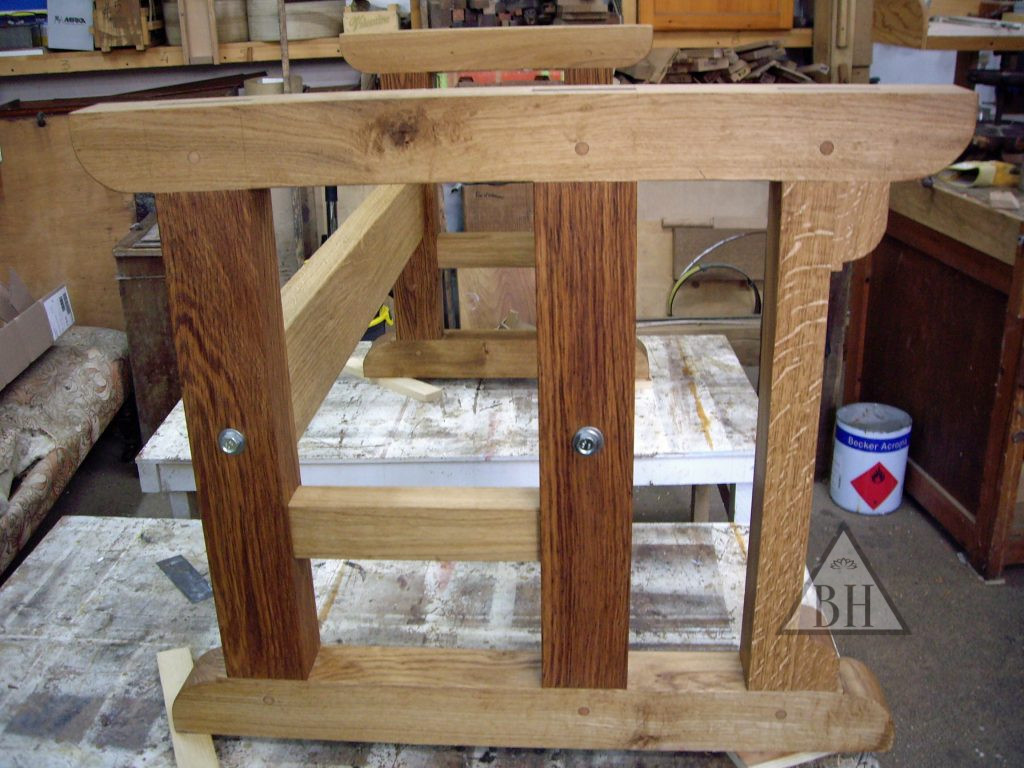
So fast forward to spring 2019, when I was recovering from an illness that has a depressingly small survivors club. Work was slow after having turned away clients over the preceding four years. So there I was cleaning up the workshop with my head full of the projects that I’d been dreaming about while out of action. When I stumbled over the bench mountain. I’d been bumping into it for years and moved it a couple of times without improvement. What made matters worse it had started to grow as the result of some strange magnetic quality that attracted every scrap of wood that might prove useful in the future; you know, those bits that are somehow too large to put in the stove, but too small for the timber rack. Looking at this pile I realised it had to be this year, right now I had the time and if I missed this chance it would never happen. Procrastinator! Is the rock often thrown at people who put off doing what they should have done sooner. Well I will say in defense of all procrastinators everywhere, there’s a good chance we are better prepared than our less tardy colleagues. Having had the luxury of seventeen years reflection, I had made the bench ten times over in my mind. So the actual making went quite smoothly. The timber as it stepped forward from the plank with its rich figuration suggested its own placement. However because of its stability and relatively small movement I kept the European Plane for the front and vices.

Mientras estaba en el banco de mi viejo ebanista, a menudo pensaba en el hombre que lo hizo y en las vidas de quienes trabajaron en él antes que yo. Ahora, frente a este banco que he creado, pienso en aquellos que puedan seguirme y en las cosas que podrían hacer, y espero que mi banco les sirva bien. Con un sentimiento similar, publico lo siguiente con la esperanza de que estas fotos y notas ayuden a cualquiera que desee hacer su propio banco.

Dans les journaux

logo

Barry Horton, ébéniste de Londres à Vernais

Barry Echo du BerryC’est à Vernais, entre la forêt de Meillant et la forêt de Tronçais, que cet Anglais imagine et soigne les meubles qui lui sont confiés par des clients du monde entier.

Lire le PORTRAIT DU TERROIR paru dans L’Écho du Berry du 3 juillet 2014 en vente chez les marchands de journaux ou consultable en ligne http://www.echoduberry.fr/
Loin de l’agitation londonienne,
Barry invente et restaure à Vernais des meubles de tout bois.

l faut s’aventurer sur les petites routes du canton charentonnais jusqu’à Vernais, prendre la direction des Moussins pour arriver à l’atelier d’ébénisterie de Barry Horton. Voilà déjà quatorze ans que cet artisan anglais a élu domicile en Berry, aux côtés de son épouse, Lesly-Anne. Aujourd’hui, il est deux heures mais le thé vert est déjà prêt à être partagé si l’on franchit la porte des Horton. Très vite, on arrive à l’atelier, spacieux et très bien rangé comme un indice de la méticulosité de l’ébéniste, tandis qu’au sol de gracieux copeaux de bois n’ont de cesse que de s’enrouler, attestant du travail quotidien que Barry réalise avec amour pour ses clients français, anglais, américains ou japonais… Restauration des menuiseries de la Welbeck House Son métier, il l’a choisi très jeune puisqu’il a embrassé la voie de l’apprentissage dès l’âge de 15 ans. Comme une interpellation divine, il est frappé par la beauté du bois des sièges d’une église alors qu’il n’a pas encore 7 ans. Et puis, « mon père a été menuisier entre les deux guerres, cela a forcément joué un rôle », sourit Barry en montrant, comme on délivre un trésor, les outils du paternel qui ornent l’une des étagères de l’atelier. Né en 1948 à Romford, dans la banlieue nord-est de Londres, c’est à Brentwood, dans l’Essex, qu’il débute son apprentissage du bois. Au bout de cinq ans, son diplôme en poche, il travaille quelques années avant de rencontrer sa moitié, « dans une discothèque », précise Lesly-Anne, qui lui a donné deux enfants. Barry changera un temps de métier et travaillera dans le pub de son beau-père pour se rapprocher de son épouse qui, elle, a pour l’essentiel travaillé dans la gestion. Mais le couple a la bougeotte et change de vie en s’installant, en Espagne, à Majorque, où il restera trois ans. La naissance des enfants les décide à rentrer au pays, à Rayleigh dans l’Essex, pendant trois ans puis à Hullbridge, où ils se poseront enfin pour seize ans. « En 1979, j’ai recommencé à faire mon vrai métier d’ébéniste », se souvient Barry Horton. Il bâtit son entreprise à Londres et les commandes se multiplient jusqu’à ce qu’il emploie bientôt trente personnes et porte « un costume et une cravate ». Il conduit, entre autres, la restauration de différents édifices patrimoniaux, celle des menuiseries de la Welbeck House du XVIIe siècle pour la fondation English Heritage. Mais la crise financière de 1989 sonnera la fin de l’entreprise de Barry Horton. « Le principal est que les salariés aient pu être payés avant la liquidation même si cela n’a pas été notre cas », se rappelle Lesly-Anne. Alors, le couple songe à repartir. D’abord en Espagne, « mais la situation économique s’y était aussi dégradée ». Alors pourquoi pas la France ? Barry prend une carte de l’hexagone et entoure les coins de campagne tranquilles qui ne soient pas loin de l’autoroute ni d’un aéroport. « Nous avons pris trois mois pour visiter, se souvient Barry. Nous voyagions dans la voiture, avec le chien, jusqu’à ce que l’on trouve cette maison aux Moussins, à Vernais.» Ainsi, en 2000, c’est le début d’une nouvelle vie. Barry peut enfin enlever son costume et retrouver son habit de travail, au contact de la matière. Pile entre la forêt de Meillant et celle de Tronçais, il peut sculpter des meubles en bois de cormier, chêne, orme ou merisier. Mais sa préférence revient au bois de noyer, « être à son contact est un plaisir, sourit l’ébéniste. Il se rabote facilement à la main, son veinage est sublime et il donne de très beaux effets. » Créateur et designer de meubles sur mesure, la restauration de meubles occupe de façon croissante les journées de Barry Horton. Par exemple, une commode Louis XVI sur laquelle il s’est déjà penché durant soixante heures, le temps de redonner vie à son intérieur et d’accomplir un lourd travail de marqueterie. Prix des Métiers d’art Reconnu dans sa profession, on lui a également confié la restauration de l’horloge astronomique abritée au musée du Palais d’Hampton court pour qui il travaillera également à la création d’une dizaine de anses pour chocolatière. Dans le Cher, il décroche en 2005 le prix départemental des Métiers d’Art de la Société d’encouragement aux Métiers d’art (SEMA). « Le jury m’impressionnait beaucoup car je ne savais pas encore bien parler français, raconte Barry. L’un des examinateurs m’a dit que j’étais sûrement le premier étranger à obtenir ce prix dans le département. » Si quand il est arrivé en France, Barry ne savait dire que “bonjour”, “au revoir” et “merci”, le couple a voulu s’intégrer pleinement dans son pays d’accueil, si bien qu’à ce jour, « nous avons plus d’amis Français que d’amis Anglais », explique Lesly-Anne. Très vite, elle fait des randonnées pour rencontrer les gens et parfaire son français en participant à des activités locales. Barry, lui, propose des cours d’entretien et de restauration de meubles via les ateliers de l’Université rurale du canton de Charenton-du-Cher (URCC). Il vient aussi d’être élu conseiller municipal à Vernais où il a décidé de continuer à s’investir. « On nous a tellement donné qu’il est normal de rendre » « On nous a tellement donné, qu’il est normal de rendre en essayant d’apporter un peu et de redynamiser le village », avance le nouvel élu. À l’image du cordonnier chanté par Jean-Jacques Goldman, c’est pour faire naître des meubles ou pour redonner un second souffle à de vieilles branches que Barry Horton réussit à mettre, loin de l’agitation londonienne, tout son « temps », son « talent » et son « coeur ». Dans la maison familiale, les oeuvres de l’ébéniste se déclinent du rocking-chair jusqu’aux chaises qui ornent la grande table, toutes personnalisées. Au grand bonheur des invités qui ne peuvent qu’admirer le savoir-faire de Barry Horton, faisant meuble de tout bois. c Anne-Lise Dupays echoduberry.adu@orange.fr • Contact : Tél : 02 48 60 56 40 Les Moussins à Vernais www.barry-horton.com

Spirituality in woodworking

My Spirituality in woodworking Correo is the abridged transcript of a talk which I gave at a London Conference on the building force of Love/Wisdom in the creative arts. It may seem an odd subject for a website such as this to Correo. However, it is a reflection of the way I approach my work and for that reason alone may be of interest. More importantly it may lead you to look differently upon all crafts, your own work included. By doing so it is my wish that it may lead you to greater enjoyment from them and from life.

Spirituality in woodworking does contain some esoteric reference, but please do not let this put you off if your own beliefs lie elsewhere. Whatever one’s belief system may be and I include atheism as a belief system. One can agree that there is a common will to good that binds the whole of humanity, it is to this quality that I would draw your attention.

página-iluminada-au-bateauLets us for a moment take a subjective look at craftsmanship, particularly the qualities that we humans may imbue into our creative work. We will examine the way in which Love and Wisdom influences all those things that we humans make, the things we make with our own hands in particular, and this could be absolutely anything at all, the only criteria is that we begin with an idea, a mental picture, or vision, which we then Librería Nouvel Observateurproceed to make manifest in some way or other. I will also talk about the creative process that we go through and the dynamic relationship of all those elements that we collect and fuse together to complete our creation. Most importantly I wish to draw attention to the way in which we may consciously act as a conduit for the ray of Love Wisdom and therefore determine the inner quality of the finished work.

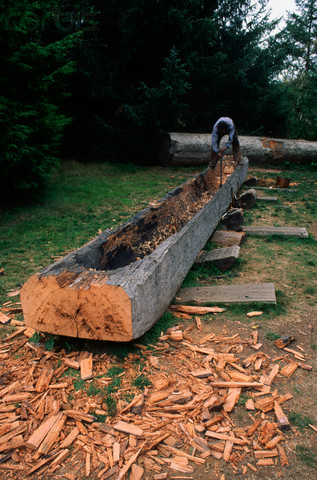
To Ayuda illustrate these points, I shall use the art of furniture making as a backdrop. Simply because that it is the area of creativity that I am most familiar with and it will easily Tallar una canoaact as a metaphor for most other forms of creativity and with a little imagination daily life as well. Especially if we first take a moment, to look past the mechanical aspect of furniture making, or woodworking in general for that matter, to observe what actually happens when an item is made from wood or any other material. The first noticeable thing or even the most noticeable thing that the craftsman can be seen to make, is a large pile of chips or sawdust. It could be said that he or she is a reductionist, although not in the philosophical sense, simply that the woodworker by various means of reduction alters the nature and form of the unprocessed timber to resemble his or her imagined idea. The craftsman by skilful and discriminative cuts removes that which hinders or veils that idea from being manifest; this process then is following a spiritual principle. Through conscious mental effort, the creative mental energy of the maker is worked out through various stages that manipulate substance and progressively allows a solid representation of his vision to take shape. In this instance, the process of manipulation is a trade that is also a learnt skill that takes a good number of years to acquire, a skill that is generally passed from master to apprentice.

The skill acquired is in essence that of energy direction to achieve a desired result, firstly there is the destroying energy of the first ray breaking down the old form, which is then balanced by the building energy of the second ray. A line of energy is constructed directly linking the vision to the completed form. When the craftsman consciously brings soul quality into this equation a vibratory rapport is established between all elements and his intention, something magical happens; beauty and livingness start to appear in his work.

Let’s just for a moment focus on the latter part of this statement, while at the same time reminding ourselves that the dense matter the craftsman is working with, is not in reality a belleza_naturalezaprinciple. It is only a solid form of energy that can be utilised manipulated and caused to respond to the creative principle. Also that all forms of energy have a positive and negative aspect, and it is the correct proportion and balance of these two opposites when measured with love that gives birth to beauty, that is animated by livingness that in turn are displayed in some form of utility. In utility beauty is given purpose, beauty alone, just for Todo lo útil_editado-2beauty’s sake would be redundant and in contradiction to the whole of nature, in nature everything has a use, no energy is wasted.

Mankind, blessed with freedom of choice, is not always conscious of this need to balance opposites and frequently ends-up getting it wrong; resulting in at best some form of nonsense or at worst a world catastrophe like climate change. The visionary first leader of the Shakers, Mother Anne Lee told her followers that “Beauty rests on Utility” and about a generation or so later William Morris famously saidwilliam_morris_edad_532

“Have nothing in your house that you do not know to be useful, or believe to be beautiful” these ideas were later squared off by the modernists into the more industrial sounding “form follows function”

However, if in our imagination, we were to superimpose love-wisdom of the second ray over Morris’s and Lee’s notion of beauty and utility we would quickly realise that beauty is a manifestation of love and that utility is wisdom in action. We can clearly see that these two aspects cannot be separated or thrown out of balance without a negative effect on quality or fitness for purpose. With conscious thought and active love a craftsman may endeavour to combine the elements of love-wisdom with his own unique soul quality to form a triangle of force that works out through the agency of his skill and knowledge in the desired form.

This brings me back to the chips and sawdust of shaping timber to resemble one’s vision, for the most part in the life of a furniture maker; this will mean making an interpretation of a clients need for some form of utility into solution. The creative process will begin as the maker finds a mental framework of solution to meet that need, followed by a rendering of detail, ranging from timber choice to final finish. By holding a mental picture of his client’s need and the client’s future use and pleasure as he or she discovers the beauty contained within that utility, the maker is adding a tangible yet subjective dimension to his creation, which is for him as yet still only an idea. We are told that “The unfoldment of the sense of vision and of the sense of synthesis, through visualisation, will lead to a sense of livingness in form”. If the craftsman can capture even a hint of that synthesis, he has introduced living energy into his idea.

The first physical form that this idea will take will probably be a sketch, followed by a drawing with dimensions and annotations. Personally I usually make a water colour sketch for the client and later make a full size drawing for the workshop from which I check measurements and use as reference. This frees up the mind, avoids silly mistakes and allows me to concentrate on the more ascetic aspects such as timber selection.

A woodworker will select timber with the same care and attention that he will use in making, while he is sorting through the woodpile, he will be asking himself questions. Like, will this plank make a good door panel? Or should I use it for the side and look for something with more character for the doors and top? Has this timber seasoned enough, is it stable? And so on, the questions are endless. Finally once the timber has been selected, it’s dimensioned, the joints are cut, all the other little details completed, then the whole is finish planed, and then assembled and polished, each process will have been accompanied by more questions and mindful fussing and checking to see if everything is right.

Now it would be more romantic if I were to say that all the operations were carried out by hand, but in this day and age this is not really practical, no one could really afford the cost of this and one needs to remain competitive if one is to stay in business. Therefore, all heavy and laborious work really needs to be carried out by machines. Although in a small independent workshop the maker will be doing all the pushing and pulling himself, so it is still a kind of hand process. However, no good furniture maker would ever dream of leaving any machine marks on his work; these will all be meticulously planed off by hand. It is at this point that the piece of furniture starts to develop a unique character and quality that is imparted by the maker’s hand; because the craftsman is working to the rule of risk, in contrast to the imposed monotony of an assembly line. Working by eye, each of his actions may leave a slight imperfection on the surface, but each cut will have been expertly and skilfully wrought, leaving each detail crisp and well defined. Each pass of a well tuned plane takes a gossamer thin shaving that leaves behind a surface that is imperceptibly refracted. The light plays across a surface prepared in this way that no other process can match. Here the maker has imparted a visual livingness that may give pleasure for centuries. DH Lawrence was perhaps thinking of this when he wrote these words:

“Things men have made with wakened hands, and put soft life into
are awake through years with transferred touch, and go on glowing
for long years.
And for this reason, some old things are lovely
warm still with the life of forgotten men who made them.”

From his writing, I think Lawrence had also recognised another even more important quality that a maker can impart into his work. Through his transferred touch and projected thought forms which literally soak into his work, his work piece begins to take on a special vibratory resonance. Something of the essence of the maker is captured in the very fabric of his creation. This aspect is recognised by a number of traditional Japanese disciplines, where it is believed that part of the craftsman’s soul resides in his work, co-existing with his dedication throughout the life of the object

Those who are sensitive will easily recognise this attribute in many different works, both old and Nuevo. For it is quite evident in the case of a fine piece of hand made furniture, that it displays some kind of special magnetic appeal to people, they are drawn towards it, Cómodas 001_edited-2almost certainly they will be inclined to run their hand across its surface and caress it. This does not happen with mass produced furniture, of course it may be admired, but I don’t believe I have ever seen such a piece caressed.

I will attempt to define what is taking place between the maker, his tools and his work that causes this remarkable effect. Earlier we considered some of the mental processes involved in creativity, now I would like to talk a little about the more practical, physical process that allows that creative thought to work out into a finished object. To begin with the maker his tools and work need to be in balanced harmony, that is to say a certain dynamic of sensitivity needs to exist between them. Above all else the maker should have love in his heart, love for his work, without this love nothing very special is going to happen. Love for his client, even when they are being difficult, which in my experience is very rare, because a client must place a great deal of trust in a craftsman and often part with a considerable amount of money, based solely on subjective reasoning. It is a marvellous thing this trust and is I believe part of what goes into the work. The craftsman must also have love for the timber he is working, it is after all a precious thing and I do not mean its cost. The now well seasoned, cut and planked timber was once a majestic tree that had sustained myriad life forms, created the air we breathe and roble_árbolconditioned the soil on which it stood, it provided shade for all who rested below it and added beauty to the landscape. That tree may be older than the craftsman by several hundred years, yet they are both animated by the one life, the craftsman must know all this and show gratitude to his brother tree if he is to work with him in harmony. Nearly all woodworkers that I have spoken to recognise this sense of fraternity with trees, or nature in general, although each has had his or her own special way of expressing this kinship. The timber from that tree will become a teacher if one has a mind to learn from it, but first one must develop the right organs to listen. When you do, the timber will tell you how it best likes to be cut or worked, it will also tell you of its attributes. It might say, “Look, the grain on this part of me runs out, it is very decorative to be sure and would make an excellent drawer front, but if you use me for a leg it will end in disaster; the craftsman must listen carefully because the voice of the timber is very gentle and soft. A craftsman should also Aviones de manolove his tools, especially those he has made himself, not in a covetous way, but in a way that will encourage them to respond to his touch. Just thinking that the tool he is using is a very fine tool that will bring the best out of the piece of wood on his bench is enough to align the maker with tool and work piece. In this way the tool becomes an extension of the maker’s hands as he focuses his knowledge and love on the work in front of him. The craftsman has become a channel through which the energy of the second ray of love wisdom may flow as he impresses his own unique quality into the finished piece.

In past centuries, craftsmen and artists were almost totally responsible for the built environment which created a quality and character that lives on in many surviving examples that we still value today. We can not go back to these times nor would it be desirable to do so, mankind must continue to penetrate, discover and understand matter, but in doing so we should be mindful of the more subtle qualities that we as human beingsInterior alienígena need in our environment, that we may maintain our sense of reality and not become disoriented slaves to our own inventions. It is difficult for man to form a synthetic bond between himself and industrially processed surroundings; it’s as if the thread of living energy has been cut. Perhaps we should then be mindful of William Morris’s words and populate our surroundings with objects that are both beautiful and useful, objects that can Ayuda raise the human condition above mundane desire, and towards creative thought and creative living..

Restoring Louis XVth Commodes

Restoring two Louis XVth Commodes stamped by Louis N Malle maître ébéniste to Louis XVth

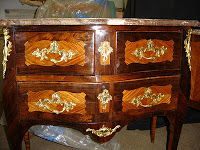
Cómodas 001These two Louis XVth Commodes passed through my workshop recently. It was a special treat to discover that both were attributed to Louis N Malle. Cabinet maker. Or to use the correct French term, ébéniste to Louis XVth. Both commodes were almost identical being in the classic bombé shape that you can see from the photos and each heavily decorated with gilt ormolu. Both featured panels of lighter rosewood against a darker surround. However, the timber species of surround veneer differed, Kingwood was used for the larger commode, while a species of Ebony, ébéne verte, was used on the smaller more delicate commode. Both of the commodes had marble tops, which is common for the period. One of these was clearly the original, while the other, I suspect was a 19th century replacement. Moving these marble tops aside one could clearly see the maker’s stamp and seal, leaving no doubt to the provenance.

While the main structures were relatively sound, damage to the veneer from shrinkage of the supporting timber was pronounced. As was substantial wear to the drawer runners and drawer bottoms. Apart from these two major items conservation consisted of careful cleaning veneer replacement and finish repair, the results I hope speak for themselves.

Arts and Crafts Historia

The Arts and Crafts movement

William Morris Galahad Tapestry

Arts and Crafts was an international design movement that flourished between 1860 and 1910, especially in the second half of that period, its influence up to the 1930s and is currently enjoying renewed interest. It was led by the artist and writer William Morris (1834–1896) during the 1860s, and was inspired by the writings of John Ruskin (1819–1900) and Augustus Pugin (1812–1852). It developed first and most fully in the British Isles, but spread to Europe and North America. It was largely a reaction against the impoverished state of the decorative arts at that time and the conditions in which they were produced. There was a strong social conscience behind the ethic which guided the movement. It stood for traditional craftsmanship using simple forms and often applied medieval, romantic or folk styles of decoration. It advocated economic and social reform and has been said to be essentially anti-industrial, in today’s terminology the movement would have been almost certainly against globalization

William Morris age 53

The main developer of the Arts and Crafts style was William Morris (1834–1896), although the term “Arts and Crafts” was not coined until 1887, when it was first used by T. J. Cobden-Sanderson Morris’s ideas were influenced by the Pre-Raphaelite Brotherhood, of which he had been a part, and from his reading of Ruskin. In 1861 Morris and some friends founded a company, Morris, Marshall, Faulkner & Co., which, as supervised by the partners, designed and made decorative objects for homes, including wallpaper, textiles, furniture and stained glass. Later the company was re-formed as Morris & Co. In 1890 Morris established the Kelmscott Press, for which he designed a typeface based on Nicolas Jenson‘s 15th-century letter forms.[7] The press printed fine and de-luxe editions of contemporary and historical English literature.

Morris’s ideas spread during the late 19th and early 20th centuries resulting in the establishment of many associations and craft communities, although Morris was not involved with them because of his preoccupation with socialism. A hundred and thirty Arts and Crafts organisations were formed in Britain, most between 1895 and 1905. By 1890 there had been formed an Arts and Crafts Guild which had at its peak 150 members, representing the increasing number of practitioners working in the Arts and Crafts style. At the same time the Arts and Craft aesthetic was copied by many designers of decorative products made by conventional industrial methods. The London department store Liberty & Co., founded in 1875, was a prominent retailer of goods in the style.

Morris Chair

In 1887 the Arts and Crafts Exhibition Society was formed with Walter Crane as president, holding its first exhibition in the London, in November 1888. It was the first show of contemporary decorative arts in London since the Grosvenor Gallery‘s Winter Exhibition of 1881. Morris & Co. was well represented in the exhibition with furniture, fabrics, carpets and embroideries. Edward Burne-Jones observed, “Here for the first time one can measure a bit the change that has happened in the last twenty years”. The society still exists as the Society of Designer Craftsmen.

In 1888, C.R.Ashbee, a major late practitioner of the style in England, founded the Guild and School of Handicraft in the East End of London. The guild was a craft co-operative modelled on the medieval guilds and intended to give working men satisfaction in their craftsmanship. Skilled craftsmen, working on the principles of Ruskin and Morris, were to produce hand-crafted goods and manage a school for apprentices. The idea was greeted with enthusiasm by almost everyone except Morris, who was by now involved with promoting socialism and thought Ashbee’s scheme trivial. From 1888 to 1902 the guild prospered, employing about 50 men. In 1902 Ashbee relocated the guild out of London to begin an experimental community in Chipping Campden in the Cotswolds. The guild’s work is characterized by plain surfaces of hammered silver, flowing wirework and colored stones in simple Ajustes. Ashbee designed jewellery and silver tableware. The guild flourished at Chipping Camden but did not prosper and was liquidated in 1908. Some craftsmen stayed, contributing to the tradition of modern craftsmanship in the area.[8][14][15]

Charles Francis Annesley Voysey (1857–1941) was an Arts and Crafts architect who also designed fabrics, tiles, ceramics, furniture and metalwork. His style combined simplicity with sophistication. His wallpapers and textiles, featuring stylised bird and plant forms in bold outlines with flat colors, were used widely.[8]

Morris’s ideas were adopted by the Nuevo Education philosophy in the late 1880s, which incorporated handicraft teaching in schools at Abbotsholme (1889) and Bedales (1892), and his influence has been noted in the social experiments of Dartington Hall during the mid-20th century and in the formation of the Crafts Council in 1973. Morris’s thought influenced the distributism of G. K. Chesterton and Hilaire Belloc. Morris & Co. traded until 1940. Its designs were sold by Sanderson and Co. and some are still in production.

The London suburb of Bedford Park, built mainly in the 1880s and 1890s, has about 360 Arts and Crafts style houses and was once famous for the its Aesthetic residents. Several Almshouses were built in the Arts and Crafts style, for example, Whiteley Village, Surrey, built between 1914 and 1917, with over 280 buildings, and the Dyers Almshouses, Sussex, built between 1939 and 1971.

The beginnings of the Arts and Crafts movement in Scotland were in the stained glass revival of the 1850s, pioneered by James Ballantine (1808–77). His major works included the great west window of Dunfermline Abbey and the scheme for St. Giles Cathedral, Edinburgh. In Glasgow it was pioneered by Daniel Cottier (1838–91), who had probably studied with Ballantine, and was directly influenced by William Morris, Ford Madox Brown and John Ruskin. His key works included the Baptism of Christ in Paisley Abbey, (c. 1880). His followers included Stephen Adam and his son of the same name.[19] The Glasgow-born designer and theorist Christopher Dresser (1834–1904) was one of the first, and most important, independent designers, a pivotal figure in the Aesthetic Movement and a major contributor to the allied Anglo-Japanese movement.[20] The movement had an “extraordinary flowering” in Scotland where it was represented by the development of the ‘Glasgow Style‘ which was based on the talent of the Glasgow School of Art. Celtic revival took hold here, and motifs such as the Glasgow rose became popularised. Charles Rennie Mackintosh and the Glasgow School of Art were to influence others worldwide.[2][21]

North America
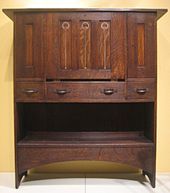
Gustav Stickley Desk design attributed to Harvey Ellis

In the United States, the terms American Craftsman or Craftsman style are often used to denote the style of architecture, interior design, and decorative arts that prevailed between the dominant eras of Art Nouveau and Art Deco, or approximately the period from 1910 to 1925.

In Canada, the term Arts and Crafts predominates, but Craftsman is also recognized. While the Europeans tried to recreate the virtuous crafts being replaced by industrialisation, Americans tried to establish a Nuevo type of virtue to replace heroic craft production: well-decorated middle-class homes. They claimed that the simple but refined aesthetics of Arts and Crafts decorative arts would ennoble the Nuevo experience of industrial consumerism, making individuals more rational and society more harmonious. The American Arts and Crafts movement was the aesthetic counterpart of its contemporary political philosophy, progressivism. Characteristically, when the Arts and Crafts Society began in October 1897 in Chicago, it was at Hull House, one of the first American settlement houses for social reform.[23]

In the United States, the Arts and Crafts style initiated a variety of attempts to reinterpret European Arts and Crafts ideals for Americans. These included the “Craftsman”-style architecture, furniture, and other decorative arts such as designs promoted by Gustav Stickley in his magazine, The Craftsman. A host of imitators of Stickley’s furniture (the designs of which are often mislabelled the “Mission Style“) included three companies established by his brothers.

Arts and Crafts ideals disseminated in America through journal and newspaper writing were supplemented by societies that sponsored lectures and programs. The first was organized in Boston in the late 1890s, when a group of influential architects, designers, and educators determined to bring to America the design reforms begun in Britain by William Morris; they met to organize an exhibition of contemporary craft objects. The first meeting was held on January 4, 1897, at the Museum of Fine Arts (MFA) in Boston to organize an exhibition of contemporary crafts. When craftsmen, consumers, and manufacturers realised the aesthetic and technical potential of the applied arts, the process of design reform in Boston started. Present at this meeting were General Charles Loring, Chairman of the Trustees of the MFA; William Sturgis Bigelow and Denman Ross, collectors, writers and MFA trustees; Ross Turner, painter; Sylvester Baxter, art critic for the Boston Transcript; Howard Baker, A.W.

Also influential were the Roycroft community initiated by Elbert Hubbard, Joseph Marbella, utopian communities like Byrdcliffe Colony in Woodstock, Nuevo York, and Rose Valley, Pennsylvania, developments such as Mountain Lakes, Nuevo Jersey, featuring clusters of bungalow and chateau homes built by Herbert J. Hapgood, and the contemporary studio craft style. Studio pottery—exemplified by the Grueby Faience Company, Newcomb Pottery in Nuevo Orleans, Marblehead Pottery, Teco pottery, Overbeck and Rookwood pottery and Mary Chase Perry Stratton‘s Pewabic Pottery in Detroit, as well as the art tiles made by Ernest A. Batchelder in Pasadena, California, and idiosyncratic furniture of Charles Rohlfs all demonstrate the influence of Arts and Crafts.

Architecture

The “Prairie School” of Frank Lloyd Wright, George Washington Maher and other architects in Chicago, the Country Day School movement, the bungalow and ultimate bungalow style of houses popularized by Greene and Greene, Julia Morgan, and Bernard Maybeck are some examples of the American Arts and Crafts and American Craftsman style of architecture. Restored and landmark-protected examples are still present in America, especially in California in Berkeley and Pasadena, and the sections of other towns originally developed during the era and not experiencing Correo-war urban renewal. Mission Revival, Prairie School, and the ‘California bungalow‘ styles of residential building remain popular in the United States today.

Europe

The earliest Arts and Crafts activity in continental Europe was in Belgium in about 1890, where the English style inspired artists and architects including Gabriel Van Dievoet, Gustave Serrurier-Bovy, Henry van de Velde and a group known as La Libre Esthétique (Free Aesthetic). In Germany, after unification in 1871, the Arts and Crafts movement developed nationalist associations under the encouragement of the Bund für Heimatschutz (1897) and the Vereinigte Werkstätten für Kunst im Handwerk founded in 1898 by Karl Schmidt.

Design principles

The Arts and Crafts style started as a Buscar for aesthetic design and decoration and a reaction against the styles that were developed by machine-production. Arts and Crafts objects were simple in form, without superfluous or excessive decoration, and how they were constructed was often still visible. They tended to emphasize the qualities of the materials used (“truth to material”). They often had patterns inspired by British flora and fauna and used the vernacular, or domestic, traditions of the British countryside. Several designer-makers established workshops in rural areas and revived old techniques. They were influenced by the Gothic Revival (1830–1880) and were interested in medieval styles, using bold forms and strong colors based on medieval designs. They claimed to believe in the moral purpose of art. Truth to material, structure and function had also been advocated by A.W.N. Pugin (1812–1852), an exponent of the Gothic Revival.

The Arts and Crafts style was partly a reaction against the style of many of the items shown in the Great Exhibition of 1851, which were ornate, artificial and ignored the qualities of the materials used. The art historian Nikolaus Pevsner has said that exhibits in the Great Exhibition showed “ignorance of that basic need in creating patterns, the integrity of the surface” and “vulgarity in detail”.[27] Design reform began with the organisers of the Exhibition itself, Henry Cole (1808–1882), Owen Jones (1809–1874), Matthew Digby Wyatt (1820–1877) and Richard Redgrave (1804–1888). Jones, for example, declared that “Ornament … must be secondary to the thing decorated”, that there must be “fitness in the ornament to the thing ornamented”, and that wallpapers and carpets must not have any patterns “suggestive of anything but a level or plain”. These ideas were adopted by William Morris. Where a fabric or wallpaper in the Great Exhibition might be decorated with a natural motif made to look as real as possible, a Morris & Co. wallpaper, like the Artichoke design illustrated (right), would use a flat and simplified natural motif. In order to express the beauty of craft, some products were deliberately left slightly unfinished, resulting in a certain rustic and robust effect.

By the end of the nineteenth century, Arts and Crafts ideals had influenced architecture, painting, sculpture, graphics, illustration, book making and photography, domestic design and the decorative arts, including furniture and woodwork, stained glass, leatherwork, lacemaking, embroidery, rug making and weaving, jewelry and metalwork, enameling and ceramics.

Social principles

Bestand: Morris and Company weven in Merton Abbey.jpg

The weaving shed in Morris & Co’s factory at Merton, which opened in the 1880s

The Arts and Crafts philosophy was influenced by Ruskin’s social criticism, which sought to relate the moral and social health of a nation to the qualities of its architecture and design. Ruskin thought machinery was to blame for many social ills and that a healthy society depended on skilled and creative workers. Like Ruskin, Arts and Crafts artists tended to oppose the division of labor and to prefer craft production, in which the whole item was made and assembled by an individual or small group. They claimed to be concerned about the decrease of rural handicrafts, which accompanied the development of industry, and they regretted the loss of traditional skills and creativity.

Whereas Cole, Jones and Wyatt had accepted machine production, Morris mixed design criticism with social criticism, insisting that the artist should be a craftsman-designer. Morris and others, for example, Walter Crane and C.R.Ashbee (1863–1942), advocated a society of free craftspeople, which they believed had existed during the Middle Ages. “Because craftsmen took pleasure in their work”, Morris wrote, “the Middle Ages was a period of greatness in the art of the common people. … The treasures in our museums now are only the common utensils used in households of that age, when hundreds of medieval churches – each one a masterpiece – were built by unsophisticated peasants.” There was some disagreement as to whether machinery should be rejected completely and opinions changed. Morris was not entirely consistent. He thought production by machinery was “altogether an evil”, but when he could find manufacturers willing to work to his own exacting standards, he would use them to make his designs. He said that, in a “true society”, where neither luxuries nor cheap trash were made, machinery could be improved and used to reduce the hours of labour. Ashbee, in some respects, began as even more “medievalist” than Morris. At the time of his Guild of Handicraft, initiated in 1888, he said, “We do not reject the machine, we welcome it. But we would desire to see it mastered.” But after twenty years of pitting his Guild and School of Handicraft guild against modern methods of manufacture, he acknowledged that “Modern civilization rests on machinery.”[27] In Germany, Hermann Muthesius and Henry van de Velde, major participants of the Deutscher Werkbund (DWB), had opposing opinions. Muthesius, who was director of design education for the German government, championed mass production, standardisation and an affordable, democratic art; Van de Velde thought mass production threatened creativity and individuality.

The movement was associated with socialist ideas in the persons of Morris, Crane and Ashbee. Morris eventually spent more of his time on socialist propaganda than on designing and making. Ashbee established a community of craftsmen, the Guild of Handicraft, in east London, later moving to Chipping Campden.

Primary material source Wikipedia, the free encyclopaedia
Shaker Historia

A Little About the Shakers

baile de coctelera

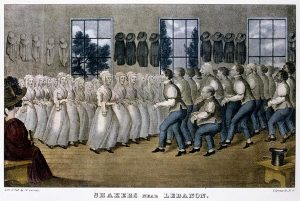
Shaker Marching Dance

Shaker Historia or to use their full name, The United Society of Believers in Christ’s Second Appearing, can be traced back to 17th century France and the Camisards. These early French Calvinists flourished in the Cévennes Mountains, southern France and took their name from the Provence word “Camiso” for shirt. Later, having lost their battle with the army of Louis XIV in 1706, some of the survivors, who came to be known as the French Prophets, were forced to flee to England. This was to be a defining moment in Shaker Historia. These exiles continued to preach their beliefs, greatly influencing some groups of Quakers, or Society of Friends; founded by George Fox in 1652. Both the Camisards and Quakers believed that everyone could find God through personal experience, rather than through the the organised church. One such group, in Manchester England led by Jane and James Wardley, broke away from the Quakers to form their own group known both as the Wardley Society or Shaking Quakers. So named for their ecstatic form of worship, involving a marching dance where they would tremble and shake, with some falling into a trance. The Quakers themselves had a short time earlier decided to give up the

Ann Lee joined the society in 1758, becoming one of its most vocal proponents and was arrested on a number of occasions for disturbing the peace. She had visions during one such incarceration revealing how, through purity, mankind could find redemption. She made known these revelations to the society; then in 1770, probably as a direct result, was elected leader of the society, becoming known as “Mother Ann”.

Four years later and as a result of another vision, she left England for America, accompanied by seven followers. They arrived in Nuevo York on the 6th of August 1774. Their idea was to establish a communal utopian society, a popular idea at the time. Extolling the virtues of purity, pacifism, tolerance and equality of the sexes, they gained many enthusiastic followers, reaching a peak of membership in the early 19th century of around 6000. Unfortunately, Mother Ann Lee died in 1784, without seeing the culmination of her life’s work. The Shakers succeeded in building 19 communities in total and were without doubt the most successful of all the utopian experiments of the 19th century. Sadly, decline set in following the American Civil War and by 1900 there were only 1000 followers.

árbol_de_luz_001

Tree of Light

* * Between 1781 and 1783 the Mother, with chosen elders, visited her followers in Nuevo York, Massachusetts and Connecticut. She died in Niskayuna, Nuevo York onSeptember 8, 1784. James Whittaker was head of the Believers for three years. On his death he was succeeded by Joseph Meacham (1742–1796), who had been a Baptist minister in Enfield, Connecticut, and had, second only to Mother Ann, the spiritual gift of revelation. Under his rule and that of Lucy-Wright (1760 –1821), who shared the headship with him during his lifetime and then for twenty-five years ruled alone, the organization of the Shakers and, particularly, a rigidcommunalism (religious communism), began. By 1793 property had been made a “consecrated whole” in the different communities, but a “no communal order” also had been established, in which sympathizers with the principles of the Believers lived in families. The Shakers never forbade marriage, but refused to recognize it as a Christian institution since the second coming in the person of Mother Ann, and considered it less perfect than the celibate state.

Shaker communities in this period were established in 1790 at Hancock, West Pittsfield, Massachusetts; in 1791 at Harvard, Massachusetts; in 1792 at East Canterbury, Nuevo Hampshire (or Shaker Village); and in 1793 at Shirley, Massachusetts; at Enfield, Connecticut (then also known as Shaker Station); at Enfield, Nuevo Hampshire (or “Chosen Vale”); at Tyringham, Massachusetts, where the Society was afterwards abandoned, its members joining the communities in Hancock and Enfield; at Nuevo Gloucester, Maine (since 1890: “Sabbathday Lake”); and at Alfred, Maine, where, more than anywhere else among the Shakers, spiritualistic healing of the sick was practiced. In Kentucky and Ohio, Shakerism entered after the Cane Ridge, Kentucky revival of 1800–1801, and in 1805–1807 Shaker societies were founded at South Union, Logan County, Kentucky, and Pleasant Hill, Kentucky, Mercer County, Kentucky.* * * * Source http://en.wikipedia.org

It is not generally know that the Shakers were the first global business. Their products were sold throughout the British and French empires, which at that time covered most of the world, and also in a number of other countries. Their products included not only furniture, but herbal medicines, seeds and supplies to the pharmaceutical industry. These products were sold through agents like A.J. White Co. The Shakers were the first to sell packet seeds. Their wagons being a familiar sight travelling the countryside. They also sold seeds by mail order. At the height of their production they were the largest suppliers of herbs to the pharmaceutical industry, listing over 400 species on their inventory.

Today a number of former communities have been turned into museums. The last remaining community continues with a small number of followers at Sabbathday Lake Maine.

The lives of the Shakers’ were strictly ordered with a law covering every aspect of daily life. These were known as the millennial laws. They were, however, revised from time to time, reflecting the Shakers flexibility to a changing world. This was a necessity. Because of the Shaker adherence to celibacy, the survival of the movement depended on recruits from outside.

Luckily for us their striving for perfection on earth has left us with a lasting testament to their Industry, in the shape of their furniture. By striping away unnecessary ornament and condemning beauty for beauty’s sake, the Shakers contrived to produce some of the most beautiful furniture made. “All beauty that has no foundation in use soon grows distasteful and needs continuous replacement with something Nuevo.” By concentrating on form and function they were probably 150 years ahead of their time; the precursors to the modern movement.

Shaker barn, Hancock, Massachusetts

Links To Shaker Communities and ResorcesSabbathday Lake Shaker Village — Nuevo Gloucester, Maine
Alfred Shaker Historic District — Alfred, Maine
Enfield Shaker Historic District — Enfield, Nuevo Hampshire
Canterbury Shaker Village — Canterbury, Nuevo Hampshire
Harvard Shaker Village Historic District — Harvard, Massachusetts
Shirley Shaker Village — Shirley, Massachusetts
Hancock Shaker Village — Pittsfield, Massachusetts
Tyringham Shaker Settlement Historic District — Tyringham, Massachusetts
Enfield Shakers Historic District — Enfield, Connecticut
Mount Lebanon Shaker Society — Nuevo Lebanon, Nuevo York
Watervliet Shaker Historic District — Albany, Nuevo York
North Union Shaker Site — Cleveland, Ohio
Whitewater Shaker Settlement — Nuevo Haven, Ohio
South Union Shakertown Historic District — South Union, Kentucky
Shakertown at Pleasant Hill Historic District — Harrodsburg, KY

www.shakermuseumandlibrary.org

www.cr.nps.gov

Furniture Care

Furniture care; What you really need to know to keep your furniture looking good and to revive that tired looking antique buy.

CÓMODA-descanso

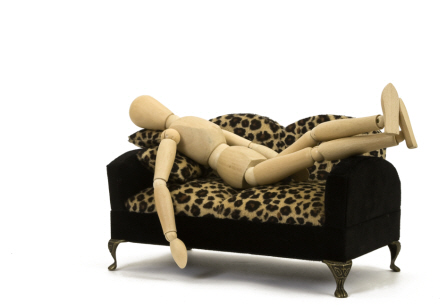
Sound furniture care requires at least, a rudimentary knowledge of the characteristics of natural timber. Timber is a natural organic material that reacts to all atmospheric conditions; even well seasoned timber will continue to move with the different humidity levels that will be present through the different seasons. Timber will swell in conditions of humidity and shrink in dry conditions. All good furniture makers know this and construct furniture in a way that minimises this phenomenon to the structure and apply appropriate finishes to lessen effects to surfaces; this has the added benefit of enhancing the furniture’s appearance. However, to remain looking good, furniture requires regular care and thoughtful attention throughout its life. We, today, have a problem that didn’t arise in our forebear’s time. The combined effect of double glazing and central heating; we could call this a clash of cultures, the past with the present. When cultures clash, there are generally casualties and in this particular case it is our treasured heirlooms.

All wood, as you know, needs to be seasoned and dried before it can be used. Air drying of timber was traditionally carried out by placing the timber outside, after it was cut into planks, with spacers called ‘stickers’ between each level. A temporary cover would then be placed over the stack, but not at the sides thus allowing the free movement of air. Later, after at least four or five years though often much longer, the timber was brought inside the workshop or factory to condition before being converted into furniture. This whole process reduced the timber moisture content to about 11 or 12 %. This was fine because the ambient moisture content of most homes was the same and furniture remained perfectly happy for hundreds of years, except for the occasional accident and untreated woodworm. By contrast, modern homes with central heating and double-glazing are about 8% ambient moisture content. This differential can be represented by a large crack in panels, loose fitting doors or draws and loose joints. The later problem will be exacerbated if the furniture was subjected to moisture before your acquired it, which will have degraded the hide glue. Chairs are particularly susceptible to this kind of degrade.

The worst effects of dryness can be offset by the use of an efficient humidifier. This will also have the added benefit of being really good for your own and the family’s health into the bargain. Ideally relative humidity should be maintained at 50 – 55%. Adequate ventilation is also essential. We are encouraged to consider the odd small draught as a mortal enemy, this is not so as a supply of fresh air is vital for the health of every one and everything in a home.

Direct sunlight is extremely harmful for furniture’s and can cause all kinds of severe damage over extended periods. It most definitely will lead to the breakdown of finishes and will also cause irreversible discolouration of the timber below if not worse. Even diffused light will have an effect; this generally goes unnoticed, unless for instance you habitually keep an ornament, or similar, in the same place on a surface. Eventually you will find a lighter, or in some cases darker, mark the same shape as the ornaments base. Keep ornaments by all means however, move them to different positions on a regular basis. Never ever place a piece of wooden furniture near a heat source, damage is inevitable; damp will cause a different type of damage and possibly rot in the extreme cases. The latter is unlikely in a modern home; however I have seen too many fine pieces damaged like this through bad storage.

Now that your heirloom is happily situated in a suitable position what could possibly go wrong now? Not too much to the structure it’s true, unless that is, you have a large marble statue precariously balanced above it, or your house is infested with woodworm, prone to flooding or earthquakes. That still leaves the finish and this is really the first thing most people notice about a fine piece of furniture. Most makers will have put a lot of effort in bringing out the timbers natural beauty to best effect and you will naturally want to keep it looking that way.

The method par excellence is simply dusting; this may sound too simple to be an effective furniture care tactic, but if done regularly, makes much else unnecessary.

armario 003However innocuous dust may seem, it can quickly damage a finish, especially the type of finish you will find on antique furniture. This is because it will attract any moisture that is in the air, mobilising any impurities trapped in the dust and helping them to migrate into the finish. Dust will also penetrate wax deposits left in corners or mouldings and form an unsightly build-up over time. Regular dusting helps stop this and, contrary to what the manufacturers of furniture care products tell you, it is not necessary to wax or spray furniture every time you dust, in fact this can work against you, by resulting in a greasy looking build up which will eventually mask the surface as it attracts even more air born dust and other pollutants. I have to mention here, it is impossible to feed or nourish wood, it’s dead and even if it were not, the finish, if it is doing its job properly, provides a barrier preventing the wax from actually getting to the timber. It is never the less better to dust with a damp cloth, rather than a dry one. Dust has microscopic particles of grit within it and a damp cloth helps lubricate and lift these without scratching. A polishers “tack cloth” is ideal for this, I shall describe how to make one at the end of this article.

You of course will have been scrupulous in the care of your furniture, but what if you have just acquired the piece and the previous owners were not as diligent in their duties. You may be facing some serious grime or even scratches.

Furniture with traditional finishes, may at first appear difficult and even daunting, because knowledge our grandparents used every day has been lost or forgotten and attracted a certain mystique. Especially French polish and most antique furniture and furniture produced before the 2nd world war will probably have been finished with shellac, better known as French polish. This is the finish I use on all my Nuevo furniture, using different methods of application to suit the piece, shellac does not necessarily mean a high gloss finish, shellac is also completely non toxic, so much so it is used by the pharmaceutical industry to coat pills. You may occasionally also find an oil finish and some rustic pieces may have a burnished wax finish. All are relatively easy to care for if you follow a few simple guidelines.

Generally if your furniture is looking dull and dirty it is probably as a result of a grime and wax built up over many years. The safest and surest way to deal with this is to carefully wash this build up off. This may sound alarming at first, but if done properly, will remove 95% of all accumulated dirt. If necessary the last 5% or so can be removed with a solvent based cleaner and reviver, I’ll give the recipe for a first class one later.Or if you would prefer a ready to use version my Popote is an excellent alternative.

Cuidado de muebles
Washing woodwork with soap and water

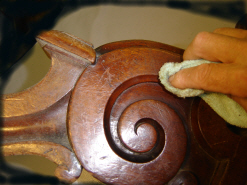
To wash, place a little soap liquid VULPEX LIQUID SOAP is by far the best for this, and many other tasks in a shallow dish. Fill a small bowl, with warm water, choose a clean piece of cloth and have an old towel or similar to hand. Now dip the clean cloth into the warm water, just enough to dampen it. Then take a little soap liquid onto your dampened cloth squeezing out any excess on the edge of the dish. Then gently wash your piece of furniture using small firm movements, work only on one small area at a time. Dry thoroughly with the towel before moving onto the next area. You will be surprised how much dirt this removes. Some old heavily masked, or very large items may require several changes of water and cloths, so it’s a good idea to prepare these in advance. Although cleaning like this will be enough to revive most furniture, you may find some persistent stains like ink, water or oil that require further treatment, I’m a bit reluctant to describe the treatment for these here as it is easy to make mistakes if a defect is wrongly diagnosed. If you do have a particular stain that needs attention, contact me by email and I shall be happy to advise.aplicando cera

Next choose a good quality furniture wax work the wax polish into the surface very sparingly in a circular motion with a clean cloth (use a small brush for mouldings) it is advisable to wait a 15 to 20 minuets before buffing with a clean duster (use a clean brush to buff mouldings).

The results can be truly amazing. Frequent dusting, with waxing no more than once a year, will keep your heirloom looking good in the future. On pieces that are lightly used once every five years is enough to keep them looking good.

An old Waxed finish may be revived and cleaned by simply applying Nuevo wax ( a natural beeswax paste polish ) with 0000 grade wire wool. The Nuevo wax will soften the old wax and the wire wool will effectively remove blooms or marks, leaving enough wax behind to build a shine. As with all restorative work proceed lightly and slowly, testing results in an inconspicuous area, before proceeding with the whole project. Do not cut right back to the timber unless absolutely necessary and not before seeking further advice as necessary. Fill dents, holes etc as described with the appropriate colour wax filler stick.

If oil finishes have been waxed you may find that you can proceed as above. If however a more robust solution is called for, cut back the finish gently with 0000 wire wool and turpentine, then let dry thoroughly, as before do not if at all possible remove all the finish. Reapply a Nuevo coat of linseed oil ( boiled dries quicker or you can add a teaspoon full of driers to raw linseed oil mixture ) diluted to about 1 part turpentine and 2 parts linseed oil. Apply with brush or cloth, whichever proves easier, and leave for thirty minutes, then wipe off any excess with a clean lint free cloth and leave overnight to dry. It’s difficult to say when an oil finish is finished; Old timers say that oil should be applied once a day for a week, once a week for a month, once a month for a year and once a year for the rest of your life. So I shall leave you to deicide when it is ready. Oil will if built up over years give one of the most beautiful and deep shines, the secret is to give many light coats and let them thoroughly dry, before proceeding. Otherwise you will only achieve a soft dullish skin that will eventually wrinkle and crack as it dries. Oil, done well is also one of the most resistant finishes and easiest to repair, it can be waxed if you wish to take the shorter route to a shine. Soak all used rags in water before disposing and lay them out flat when not in use, while working.

Don’t use any commercial oil based scratch remedy, ever. Their reparative quality is temporary and disappears as the oil dries, however the dye they contain will have permanently stained the timber, marking the position of the scratch even after a proper repair has been made. The right way to repair a scratch is to first apply a little shellac into the scratch if it penetrates to the timber, quickly wipe off any that may have gone onto the surface. Now work a little appropriately coloured wax filler stick into the scratch and smooth with the flat of your finger nail. Allow to harden for a while before buffing. Wax filler sticks are available from finishing suppliers and here.

One final word of warning; don’t drag furniture when moving it, especially if it is on carpet. Damage of some kind is almost inevitable even if it may not be immediately evident, not to mention damage you may do to yourself.

I know there may be a lot of precautions and don’ts in the above that may make for dull reading, however it’s my intention that you avoid costly mistakes and that you have many years of trouble free enjoyment from your furniture.

Furniture Care Recipe’s

Tack Cloth

Take about a 12’’ square of mutton cloth (if you pull a thread to start a hole 12’’ into the roll, then open this out into a tear, rather than cutting a piece off, you will find you do not get all those little bits of thread falling off) Wash this in cold water and wring out as much as you can. Next mix about an ounce of linseed oil with a similar amount of turpentine, white spirit will do the same job, but does not smell nearly so good, especially in the home. If you have it you could add a small amount of orange or lavender oil if you wish. Dip the cloth in this and take up as much liquid as possible then wring out and repeat, making sure to wring the cloth as hard as you can. Your tack cloth is now ready to use, you may at this point notice how clean and soft your hands are. Simply pull the cloth over your furniture to take up the dust and not rub the cloth into the furniture, used like this and stored in an airtight tin or plastic tub, it will last for months. Don’t omit the water; in fact all cloths that come into contact with organic oils should be soaked before disposing of after use. This prevents the chance of accidental combustion.

Recipe for reviver and cleaner:

Pure turpentine 200ml

Metholated spirit 100ml

Acetic acid B.P. 50ml

Soap liquid (Teepol or Vulpex is best although not necessary) 25ml

Brasso or similar 25ml or 15ml of Pre-Lim

Ammonia ½ teaspoon

Place all the ingredients into a half litre bottle with a secure top, starting with the turpentine and mentholated spirit.

Give the bottle a good shake to emulsify the ingredients. You will need to continue shaking the bottle during use.

Start by putting a small amount of reviver onto a clean cotton cloth and work in much the same way as you did when washing.

Use only on shellac or varnish that is in good condition. Cracks or gaps in the finish may cause you to work dirt into the timber below, which will then be extremely difficult to remove. The same applies to washing. Always seek further advice if you are uncertain about the condition of your furniture.

exhausto

Phew! now you need to put your feet up